
You can not see radon gas. It does not have color or smell, but it can kill you. If inhaled, radon gas decay products (polonium-218 and polonium-214) can penetrate the cells of lungs and increase the risk of lung tumors. The alpha radiation from radon decay chain have become a concern for The International Agency for Research on Cancer (IARC) which is the part of the World Health Organization (WHO). Based on sufficient information and research data IARC classifies Radon as a “carcinogenic to humans” since its progeny can cause lung cancer.
According to the Maryland Department of Public Health and Environment lung cancer is the leading cause of cancer deaths in MD, accounting for 26.9% of all cancer deaths. Everybody knows that smoking may lead to lung cancer. However, exposure to radioactive radon gas in the home is the leading cause of lunge cancer in non-smokers. That said, at least 60 percent of lung cancers diagnosed today occur in those who either have never smoked or quit smoking in the past. The Environmental Protection Agency, the Surgeon General and all major health organizations agree that radon causes 15,000 to 22,000 U.S. lung cancer deaths a year. Radon gas is a problem in 1 in 15 U.S. homes, the EPA said.
American nation loses numerous amount of people due to lung cancer every year. Despite the sad statistics mentioned above, this is a time of hope for people. Cancer prevention programs are among the highest priorities for Maryland Department of Health and Mental Hygiene. Moreover, government of Maryland encouraging Radon proactive behavior of all Marylanders. Therefore, as of October 1, 2016, Radon law Montgomery County MD requires that “a single-family home located in the County must be tested for radon before completing a sale of the home.”
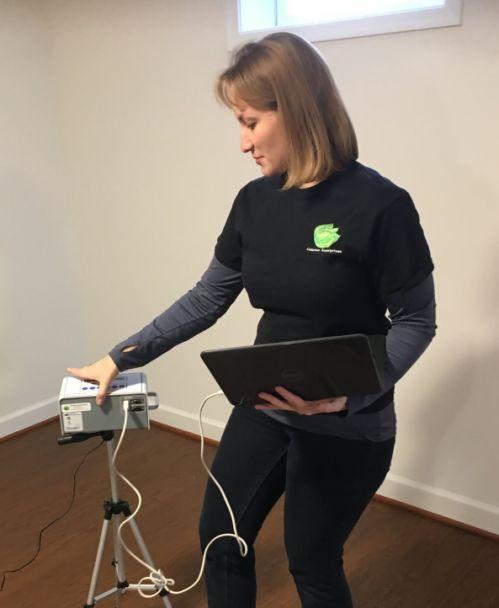
Kate Reddy Realtor and certified by NRPP Radon Measurement
provider recommends always to have a radon inspection contingency in
real estate purchase offer contract.
Short-term radon test will be performed in the property to make sure that house does not hide health hazard for your family and Radon level is below “Action” level. If elevated level of radioactive gas is detected the purchaser can ask the seller to install radon mitigation system. Radon Test clause allows the buyer to walk away from the deal, void the contract and get back the EMD money if the seller is not cooperating. The good news is that in most cases the seller will agree for remediation since the test results must be disclosed to any next buyer. Even if the seller reject to mitigate radon, the buyer can ask for an extra credit towards closing or reduce the radon levels in a home through a 203(k) mortgage loan.
Having the Radon testing done in Maryland is the only effective way to determine whether you and your family are at risk of high radioactive radon exposure. If you think you don’t need to test, think again. Every home, in every neighborhood has the potential to harbor the silent killer. The levels of radon in buildings depend on the characteristics of the rock and soil in the area. Geological map of Maryland especially Montgomery county shows lots of Metamorphic rocks: slate, quartzite, marble, gneiss. These types of stone have higher than average uranium contents. Radon is forms naturally when uranium breaks down. The higher the uranium level is in an area, the greater the chances are that house will have elevated level of radon gas.

Radon level map Maryland Montgomery county has been designated as a Zone 1 area which means there is a predicted average radon level at or above the EPA’s 4.0 pico-Curies per liter (pCi/L) Action level. The risks of lung cancer from radon exposure of at list 4.0 pCi/L is equal to the risk of dying in a car accident.
“Radon gas is a silent killer. It creates a health risk you can do something about! The first step is a test. You don’t need to flee your home if elevated level of radon is discovered, but EPA recommends to install a mitigation system and vent out radioactive gas from your home,” said Mike Calamus the CEO of Calamus-Enterprises.com and “Safe Home for the Family” radon awareness program manager.
CONTACT:
240-308-5434
SOURCE: Radon Testing Maryland


 radon1