Whole Home Dehumidifier – How They Can Benefit Your Home And How They Work?

If your house is too humid, there are many consequences because your home’s relative humidity should be between 30-50% to avoid dust mite infestation, condensation on your water pipes, wet stains on your walls and ceilings or other unhealthy conditions. With whole home dehumidifiers, your home’s indoor humidity problems can be solved and this can deter mold and mildew growth in your home and the allergic reactions that can happen from excessive moisture conditions.

Whole house dehumidifiers are installed as part of your home’s heating and cooling system, which allows them to pull the air from every room in your home, remove the moisture and then send the dryer air back into your home. You can have whole house dehumidifiers processing the air in your home, even when you aren’t using your heating or air conditioning system. If you have trouble sleeping at night because of clammy skin or you feel like you have to keep lowering the temperature setting because your home feels stuffy, chances are that whole house dehumidifiers could make your home more comfortable.

A whole-house dehumidification system in your home will manage the air’s moisture while in cooling mode, for greater comfort and indoor air quality. This technology can also help reduce the opportunity for mold and mildew problems associated with high humidity levels and minimize the impact of potential airborne pollutants.

How Do They Work?

The same as a smaller model, but on a much larger scale as you can tell. While a standard dehumidifier will consume the surrounding air, remove its moisture and pump it back out, its how whole house dehumidifiers are fitted which differs. Whole house dehumidifiers will be connected to an existing or new cooling/heating/air conditioning system and will use your other vents to its advantage consuming moisture through them.

Benefits of Whole Home Dehumidifier

  1. Low Maintenance:
    Units can be piped into your drainage system so you literally have it installed, turn it on and let it go. Water will be pumped directly out of the house. No more collecting and replacing water trays/buckets.
  2. Improved Health:
    Lowering the humidity in your home eradicates the spreads of mold, mildew and dust mites. No longer will you and your children be forced to breathe in their spores and droppings. Purchase a radon testing kit and when testing, remember that the EPA recommends residences maintain levels below 4 pCi/L, with 1.3 pCi/L being the average. If you do have high radon levels, hire a qualified professional to install a radon mitigation system ($800-$1200). These systems vent the gas directly from the ground to the air outside and can eliminate the majority of your home’s radon.
  3. Clean Air:
    Once the humidity levels are controlled the air in your home will no longer seem so heavy. Feel the clean fresh air as it enters your lungs. Breathing will never have felt so refreshing.
  4. Clean Interiors:
    With the humidity gone mold and mildew will not attack your clothes, furnishings and house structure. The smell of dampness or ‘wet dog’ as I often hear it called will be gone. Enjoy smelling clean and fresh. You can invite people around once more without being embarrassed.
  5. Damage free decorations and furnishings:
    No more throwing out cushions, rugs, curtains and more. You can redecorate with peace of mind knowing that the dampness is gone. You will not have to hide the water stains behind the furniture anymore.
  6. Sleep soundly:
    It is a common fact that a house with high humidity is not a place where you can sleep easily. With mold spores, dust mite droppings and dampness filling the air sleep is often restless and fitful. Get rid of those problems with a whole house dehumidifier and sleep will be wonderfully refreshing and sound.
  7. Minimize Radon Exposure Within your Home:
    This invisible, radioactive gas is a natural product of uranium decay occurring underground and seeps from the earth into buildings. It’s harmful when humans are exposed to even low levels of it over extended periods of time and is ranked the number 2 cause of lung cancer after tobacco. The worst affected are smokers who have up to 9 times the chance of developing lung cancer when they live in a house with high radon levels. But regardless of whether you smoke or not, protecting yourself from this invisible killer is essential.

Disadvantages of Whole Home Dehumidifiers

  • As they are bigger and more advanced than standard units, the cost is greater to run them although it would be cheaper than having multiple portable units spread throughout the home.
  • Unless you have the manpower, skills, and knowledge to fit one your self, then you will need to hire an installation team.

The Bottom Line

The bottom line is, if you have full faith that are reliably testing the chemicals in the products you and your family use every day, then you have thousands of mattresses to choose from. Some people believe purchasing more smaller and less expensive units that they can spread around their house is a smart idea, but it is actually more cost effective to bite the bullet and go for a whole house one. Why? Because the cost to run all of those smaller room- sized units will cost you a lot more than to run just the one whole house dehumidifier. Not to mention whole house models will be far more reliable and efficient.

Radon Testing and Mitigation in Knoxville

Radon is a radioactive gas you can’t see, feel, taste, or smell. It starts out as uranium, a heavy metal found in the ground and most rocks on the planet. When uranium decays, it turns into another metal called radium. When radium breaks down, it becomes radon.

Radon gas leaves the soil and becomes part of the air and water. It can be in the air around you, but it’s usually in very small amounts that aren’t harmful. Large amounts of radon cause health problems. Even though it’s a natural gas that comes from the earth, it can be toxic if you breathe in a lot of it over a long time. But there are some reliable ways you can keep your exposure low.

Where does Radon come from?
Radon is found naturally all over the world, including the U.S. It comes from the radioactive breakdown of uranium that’s present in the soil, rock, water, gas, and building materials. Human beings most commonly come in contact with it in the air and, to a lesser extent, in drinking water. It can be present in buildings of all types, particularly in residential buildings.

Radon are the highest average of levels in the nation which means that every county has an average indoor level higher than the 4 picoCuries per liter or pCi/L. This due to the fact that radon is formed by the decaying process of uranium and radium, both of which are prevalent in the soil.

Radon is an odorless, colorless, and tasteless gas that enters the home is several different ways:
1. Cracks in walls
2. Cracks in foundations
3. Loose-fitting pipes
4. Sump pumps
5. Exposed dirt floors
6. Slab joints
7. Porous block walls

1. Cracks in Walls:
Homes may contain cracks in walls and floors, though these may not be a serious problem to the home’s stability, other problems may be present. Something that can’t be easily noticed and observed, especially by the naked eye could be working its way through the cracks and crevices. Actually, what people do not realize is that this invisible threat is possibly already present at their home. This threat is so harmful that it can cause lung cancer and is even ranked as the second leading cause in the United States.

2. Cracks in Foundations:
If you see cracks accompanied by displacement or if you suspect that cracked masonry may be caused by soil settlement or soil pressure, the best strategy is to contact an experienced foundation repair contractor. An experienced full-service foundation repair contractor will have the skill and equipment to evaluate foundation cracks and displacement as well as the soil conditions that are causing foundation damage.

3. Loose-fitting pipes:
PVC or polyvinyl chloride is a versatile material used for pipes, tubing and fittings for transporting liquids. It is suitable for applications where the temperature of the liquid does not exceed 140°F, above this temperature it may soften and lose its shape.

4. Sump pumps:
A sump pump is your best defense if you have a basement or area that gets water after heavy rains. These pumps are placed in a hole under your foundation and are designed to move large amounts of water directly from your basement into an area where it won’t cause harm or seep into your storm water system.

5. Exposed dirt floors:
Dirt contains moisture from the earth. When moisture evaporates, it rises, and creates condensation when it hits cold air ducts in the crawl space. Where there is moisture and humid air, mold can grow.

6. Slab joints:
Concrete moves—expands and contracts—with changes in moisture and temperature and as part of the curing process. It is weak in tension, and as it shrinks, the stresses become greater than its tensile strength, resulting in cracks. This cracking occurs even when a slab is reinforced with wire mesh, which does not prevent cracking, but works to keep cracks tightly closed.

7. Porous block walls:
The porous block wall is a concrete-based material which are used to manufacture a range of retaining wall products that do not require separate drainage systems, however for extra longevity these are sometimes specified or recommended. The extreme porosity enables a Porous block walls to act as its own all-in-one drainage system, thereby avoiding the need for a separate drainage system and therefore saving time, money and materials in the construction process.

Once radon enters a home or business, it becomes trapped and the levels will rise. Radon is the second leading cause of lung cancer second only to cigarette smoking. Radon Mitigation are the professionals in radon testing in Knoxville, and surrounding areas.

Testing the levels of radon in your Knoxville, home can be done either through short-term testing or long-term testing. Short term testing is done when the results need to be determined within a short amount of time such as a real estate transaction. Radon testing takes two to three days. Long-term testing gives a more accurate determination as to the year round average of radon levels since levels can change from day-to-day and season-to-season. The long term testing usually takes 90 days or more.

Radon Mitigation Specialist in Knoxville
If levels are determined to be 4 pCi/L or over, this is considered dangerous and it is recommended that radon mitigation be performed immediately. Radon has the solutions for getting this dangerous gas our of your home and back into the air outside.

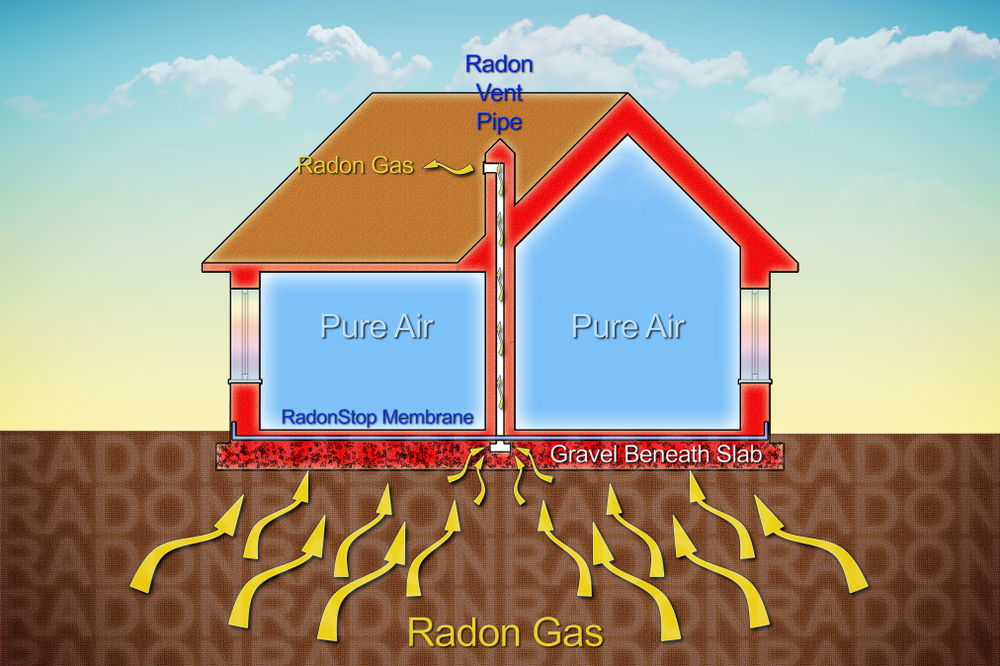
Our mitigation systems are installed by drilling a hole in your foundation or slab and connecting a PVC pipe through this hole creating a suction point. Then a fan is connected to this system to flow the radon out in the right direction. Radon will test and retest to make sure that the radon levels in your home or business are going down to a safer level. The installation of these systems will be done in a day with little disruption at an affordable cost.

Radon Mitigation Services And How To Get The Best

Radon is a metallic element in gas form. This gas can be very harmful, particularly because it breaks down into tiny particles which can get lodged in the human lungs. The particles are radioactive and hence can easily lead to lung cancer. However, not all people who are exposed to the gas risk getting cancer but the risks remain high. Unfortunately, it can be hard to tell about the existence of the gas when buying your home. The amount of radon present varies from home to home and others don’t suffer at all.

This gas is usually naturally present in the soil and the ground on which your house is built on could be the source of the gas in your house. A radon pathway or source in the home increases the danger of the gas. It can also find its way into your home through well water supply. However, waterborne radon is considered to be lower in risks compared to the gas that enters from the soil below the house. In every case, you might require radon mitigation services to remain safe in your own home.

Radon is a colorless and odorless gas that is found in high levels in all 50 states. Radon is said to be the natural gas of decaying uranium in the ground. Radiation levels of dense Radon gas emissions have been measured and found to be at a level that could cause serious health problems over time of steady exposure. For the last 20 years, scientists have become more and more away of the problem and the EPA has published materials to help people know how to make their homes Radon safe through various processes of Radon Mitigation.

Radon mitigation is the process used in lowering the radon concentration in given areas. The gas removal is done in different ways depending on the levels of the gas and the source of the gas. What is suitable for one house might not be suitable for another; hence the great need to ensure you get what your home deserves to maintain safety and health standards. Radon mitigation professionals can advise further, but you must also choose the services with care.

Licensing

It is one of the most important factors to check on when hiring the mitigation services. The situation is serious and hence you should ensure you have licensed professionals with the know how in handling the gas and removing it to be comfortable in the end that your home is safe enough. Only qualified professionals are licensed and hence quality services delivered.

Removal techniques

A good service provider should be in a position to offer good removal solutions with the right removal techniques. Depending on the gas levels and source, you should enjoy techniques that fetch you the desired results in the end. By looking at the service options including the radon mitigation systems the company offers, you will be in a position to decide how good it is going to be in offering the solutions you deserve in your home.

Reputation

You can easily tell how reliable a service provider is from reviews or feedback from past service users. An easy way of finding the best services for your needs is actually asking for referrals from your friends or other homeowners who have had mitigation services and experiences before. Referrals and recommendations will also help you stay away from providers who don’t have much to offer you. If checking online, go through the reviews to find the best. It is also important to consider the service charges in relation to what you stand to gain.

Testing

Radon testing is an easy, straightforward process. A charcoal canister is used to collect radon gas from your home, usually over the course of approximately 48 hours. During the testing period, it’s important to keep all doors and windows closed for the most precise readings. At the conclusion of the testing period, the canister is sent to a lab to measure the accumulated radon concentration. Simple as that. Do-it-yourself kits are readily available, although you may want to consider having a professional administer your test for optimal accuracy. Because your test results will be the basis of future action (either none because levels appear safe or an expensive radon mitigation) it’s important to have the best readings possible. That way you’ll be able to make an informed decision about what the next steps should be.

If there are dangerous levels of this harmful gas discovered in your home, one service that can be performed by a professional is making sure your home is completely sealed so that this gas can no longer seep into your home. This sealing process is usually done in a timely matter, does not disturb any part of your home, and like the inspection process, is made very affordable.


How to Install a Radon Mitigation System in a New Home

To suck air from under a slab, the slab must be airtight

In the United States, the Surgeon General has warned radon is the second leading cause of lung cancer. Radon can be found all across the US, and can get into any type of building.
As awareness of this hazard continues to spread, more and more homes, offices and schools are installing radon mitigation systems.
As a member of National Radon Defense, we will take you through one of our standard installations.
Please note this is not the same as testing for radon measurements. This is a look at how to install the system which helps reduce the levels of radon in an environment which may have high levels and be at risk. The testing aspect would come before these steps.
In this example, it’s important to note the radon mitigation system was installed in a new home, and so there were a few steps which are required for installation that we did not need to complete.
Mainly, there was already a PVC pipe installed and running from beneath the basement floor and extending up through the roof.
For older homes which may not have this setup already in place, installing this PVC pipe will be necessary to the entire process and of course increase the amount of time it takes to complete the installation.

1. Test the sub-slab communication.

Determining the air flow beneath the slab ensures the system will be able to vacuum the radon particles and vent them out properly.
If difficult or problem soils exist under the home, more than one extraction point may be needed.

2. Seal cracks in the foundation walls and floor

The overall goal of the system is to suck up most the air from under the slab that is rising through the soil. Sealing the cracks allows better suction, and increases the amount of soil gas captured by the mitigation system.

3. Install a vertical PVC pipe, running from beneath the slab and extending through an exit point above the roof line

radon-pipe-attic.gif

This pipe diverts the air and radon particles out of the house.

Once the PVC pipe is installed, test the sub-slab communication again to check the system.  
It is recommended to remove ten gallons of soil beneath the pipe to create more surface area of soil to suck from.
Here, we tested the pipe using a shopvac and noticed the pressure readings in the air flow were much different after sealing the cracks around the foundation.

4. Install a manometer

The manometer is mounted on the pipe and has a small tube which is inserted into the pipe.
Homeowners can check the manometer to make sure the radon mitigation system is operating correctly.
If the fluid inside the manometer is above zero on the side which has the small tube extending out into the pipe, the air is being vacuumed upward and the system is working correctly.
Of course, the manometer will read zero when installing and before the fan is turned on.

5. Cut the pipe in the attic and install the fan

The fan keeps a continuous vacuum affect in place, sucking up the air from beneath the slab in the basement and venting it out above the home. There are different grades of fans available, homes with compact soils may require a more powerful fan system than a sandy soil home.

Connect the wires (of course, this requires access to an electrical outlet in the attic).

6. Check the system

Once the fan is installed, the manometer should have a reading greater than zero. If the reading is still zero, the system has not created a negative air pressure under the slab, and radon particles could still be entering the home.
Seal the leaks and retest.

How to Reduce Radon Levels in Your Home

how to reduce radon levels in home

When the radon levels in your home exceed Tennessee guidelines, stating 200 becquerels/m3, it’s time to seek professional help in reducing radon levels to an acceptable measure. The higher the radon levels, the more urgent it is to remediate.

According to a National Research Council report for the Environmental Protection Agency (EPA), eliminating radon gas entirely from your indoor living environment is not possible. The report explained that a third of lung cancer cases caused by radon exposure could be prevented if homes met the Canadian guideline.

The following are tips to help you reduce radon levels in your home so that they’re at safe and acceptable levels:

  • Increase the ventilation in your home to allow the air to properly circulate. You might want to try increasing mechanical ventilation through a heat recovery system (HRV) to permit air exchange.
  • Seal all cracks, holes, or openings (water, sewer, electricity, etc.) in the foundation walls and floors (basement). Also, seal the joints between walls and floors and the gaps around pipes and drains (i.e. all the vents through which radon gas can possibly enter your house).
  • Cover sump pumps and drains (keeping in mind, of course, that this does not prevent their functioning).
  • Replace your basement floors (particularly earth floors) with concrete floors. This reduces the risk of radon gas entering your home.
  • Use the most common method of reducing radon levels – a fan and piping that draws radon from indoors and expels it out. This method is commonly referred to as sub-slab depressurization, and it expels radon before it enters your home.
  • Install specially-designed traps in floor drains to prevent radon from entering your basement.
  • Basement sub-floors can be ventilated by installing a small pump. This will draw the radon gas below the concrete slab to the outside.
  • Install an active soil depressurization (ASD) system, which will reduce the concentration of radon in the soil next to your home’s foundation.
  • Paint your basement floors and walls. Don’t forget to use a sealant on top of the paint and to add polyethylene sheets to the basement walls.
  • In extreme cases, such as when unacceptable levels of uranium are found in the soil around your house, remove the soil and replace it with clean fill.
  • New homes with radon-resistant features should be built following radon-resistant construction techniques, which are simple and inexpensive.

Your home is your greatest investment. Take precautions while the home is being built and you’ll minimize the risk of radon exposure.

Radon Reduction Tips for New Homes

There are a number of ways you can reduce radon in new homes:

  • Use highly resistant concrete
  • Add plasticizer to the concrete
  • Install a polyethylene membrane under the concrete
  • Install a balanced ventilation system
  • Install a pipe that runs across the concrete slab in case you need to install a depressurization system in the future.
  • Make sure that your new home is being built following the 2010 new national building codes.

All of these precautions should be taken at the time of construction and not afterward.
Finding a certified, trained and experienced professional in your city is the best and most reliable way to ensure that your home is not at risk of dangerous radon levels. Because each home is unique in its structure, its location, and therefore, its vulnerability to radon gas entry, testing and reduction should be done by trained and experienced professionals, who can also provide useful advice for the occupants’ future safety.

radon-mb

Radon is the second leading cause of lung cancer, causing an estimated 21,000 deaths in the United States annually. Unfortunately, Tennessee is a hotbed for radon.

Radon levels are measured by units of radioactivity per volume of air, called picocuries per liter (pCi/L). The EPA recommends treating homes with any level over 4.0 pCi/L. In Tennessee, 31 counties are listed as ZONE 1, meaning homes there are likely to have levels higher than 4. These include most Middle and East Tennessee counties. Call us today for a quick and effective solution to your radon problem.

How to protect your home from radon — the silent killer

radon

If you mention radon to most people, it’s likely you’ll get a blank stare. But if you mention lung cancer, you’ve got their attention! November is Lung Cancer Awareness Month, and it’s a perfect time to learn more about radon and how to test radon levels in your home.

According to US Surgeon General Richard Carmona, MD, radon is the leading cause of lung cancer among non-smokers and is estimated to cause 21,000 deaths in the U.S. each year. The scary thing is, Utah has high levels of radon throughout the state, and most of us don’t even know it.

More information about radon is available at a free Radon Awareness Open House in the south lobby of Riverton Hospital (Building 1 entrance) on Thursday, November 19, from 6-8 p.m.

What is radon?

Radon is a cancer-causing radioactive gas that results from the natural breakdown of uranium in soil, rock, and water and gets into the air we breathe. Since it can be produced by common elements, radon gas can be a problem anywhere. Radon can get into any type of building – homes, offices, and schools. You and your family are most likely to get your greatest exposure at home, where you spend most of your time.

How does radon get into your home?

Because radon is a gas, it can get in where solids can’t. Common sources where radon enters homes:

  • Cracks in solid floors
  • Construction joints
  • Cracks in walls
  • Gaps in suspended floors
  • Gaps around pipes
  • Cavities inside walls
  • The water supply

Does your home have high levels of radon?

The problem with radon is you can’t smell, taste, or see it. Eleanor Divver, radon program coordinator for the Utah Department of Environmental Quality, says, “You don’t know if your home has elevated levels unless you test it.” The good news is, testing your home for radon is simple, easy, and inexpensive. A test kit can be ordered online at Radon.Utah.Gov or you can buy one from your local hardware store.

What do your test results mean?

The average outdoor level of radon is 0.4 picocuries per liter (pCi/L) while the average indoor level is 1.3 pCi/L. The average Utah home has a high level of 5.3 pCi/L. The Environmental Protection Agency has set the “action level” – which is the point at which you need to take action to remove the radon from your home, school, or work place – at 4.0 pCi/L. If your test levels exceed that amount, you’ll want to take action to fix your home as soon as possible. In general, the higher the radon levels, the more danger you and your family are in.

If you have high radon levels, what should you do?

First, RELAX! It’s important to remember that the threat is completely correctable. Radon levels can be fixed inside every home. If you perform a single test and find high levels of radon, it’s time to hire an experienced professional who can install a radon mitigation system. Mitigation systems effectively pull radon out of your home. If you’re building a new home, consider installing a simple, inexpensive ventilation system that can protect your family from radon gas. You can find a certified radon contractor or mitigation providers at radon1.com

Take a moment and share this information with people you care about. If each of us can spread the word about radon, we can save many lives this year and for many years to come. The sooner you test your home, the better off you and your family will be. So be on the safe side. For your own peace of mind, and to keep yourself and your loved ones safe, get your home tested for radon.

How Does Radon Enter a Home or Building?

Radon forms naturally. Uranium in soil or rock breaks down to form radium, which then turns into radon gas. Once formed, radon enters a home through cracks in walls, basement floors, foundations and other openings. As radon decays, it releases radioactive byproducts that are inhaled and can cause lung cancer. Because radon comes from rock and soil, it can be found anywhere. Exposure to limited concentrations, like those found outdoors, is impossible to avoid. However, when radon gets trapped indoors, it may exist in dangerous concentrations.
Less frequently, radon may enter buildings from water used in bathroom showers and faucets. Concerns have also been raised about the radon released indoors from building materials, such as granite countertops or tiles. However, these sources have rarely proven to be a problem by themselves.2, 3
Concerns have also recently emerged about radon in natural gas extracted by hydraulic fracturing, or fracking.4 Follow-up research has found that the natural gas coming into homes in the Northeast did not generally contain enough radon to pose a serious additional risk.5

What Are the Health Effects of Radon?

Radon is the second leading cause of lung cancer in the United States, responsible for thousands of deaths each year. Exposure to radon causes no immediate symptoms, but the long-term threat of lung cancer is significant to everyone. People who have never smoked make up approximately 2,900 of the estimated 21,000 radon-related lung cancer deaths each year. 1
The health hazard comes from radioactive particles released when radon decays. These particles can be inhaled into the lung and bombard your cells with dangerous, cancer-causing radiation.4 Smoking and radon exposure can separately increase the risk of lung cancer. But if you smoke, know that exposure to both greatly enhances the risk of lung cancer.

Who Should Be Worried about Radon?

Every home should be tested for radon. Radon has been found at elevated levels in homes in every state and the only way to know is to test. Your home can have elevated levels of radon while your neighbor’s home does not. Testing is the only way to determine if you have a problem. Radon testing is easy and inexpensive and it could save your life. Thousands of lung cancer deaths could be avoided each year if home and building owners acted to test and fix.

How Can Radon Be Detected?

The only way to detect a buildup of radon in your home is to test the air. Various forms of do-it-yourself test kits are simple to use and inexpensive.
See where to get a radon test kit.
Short-term tests typically take two to seven days. During this time, place the kit in a location where it will not be disturbed, in the lowest level regularly used in your home. Follow the test directions and other official guidance to prevent problems that can affect the testing. Once the testing period is complete, seal the test kit and send it to a laboratory for analysis. Most test kits include the cost of lab analysis and an addressed envelope for submission. In a matter of weeks, you will be notified of the radon level in your home.
Long-term tests tend to be more accurate as they collect more data. They take at least three months and measure long-term averages. If you don’t want to wait for a long-term test, short-term tests can indicate if your home has a problem and requires follow-up testing.
If you prefer, hire a certified radon-testing professional. The best way to find a certified professional is to contact your state radon program. EPA has an interactive map with contact information for state radon agencies.

What Do My Radon Test Results Mean?

Radon gas is measured in picocuries per liter (pCi/L) of air. The EPA recommends taking action to reduce radon if the result is 4.0 pCi/L or greater and to consider similar actions when the radon level is between 2 and 4.0 pCi/L. The ultimate goal is to get your radon level to the lowest level possible.

How Can I Protect Against Radon?

There are several ways to protect you and your family from the dangers of radon gas.
If you have an existing home with elevated levels of radon, you can fix the problem by having a radon mitigation system installed. A radon mitigation system consists of a vent pipe, fan and the proper sealing of cracks. This system collects radon gas from underneath the foundation and vents it to the outside of your home. If you need to have a radon mitigation system installed, it is best to contact a certified radon mitigation professional to do the installation.  A list of certified professionals can usually be obtained by contacting your state radon program.
If you are building a new home, ask your contractor to install radon-resistant features. These features include gravel and plastic sheeting below the foundation, along with proper sealing of cracks and the installation of a vent pipe. Once the radon-resistant features have been installed and the home is completely built, make sure to perform a radon test, as the levels could still be elevated. If the radon levels are still elevated, a radon fan should be added to the system to lower the radon level.
Detailed information about radon reduction in your home or building can be found in EPA’s Consumer’s Guide to Radon Reduction.
The American Lung Association is working with national partners and government agencies to build in ways to reduce radon in all homes. The National Radon Action Plan outlines strategies to protect millions more people from dangerous radon exposure.

Should I have a cover put on my Radon pipe?

Homeowners frequently ask us if we put a cover on the top of the radon mitigation piping, and it’s a good question. It does seem like it would be a good idea when you look and see a pipe open to the elements. However, as we will explain in this post, not only is it not necessary for the system to be effective and to protect the fan, pipe covers can actually reduce the effectiveness of the system itself and cause big issues in the winter time.

Lets first go over the main questions we hear from homeowners when they see the opening in the top of the pipe.

Won’t rain get into the piping and negatively affect the system?

The radon mitigation fans that we use are designed to handle water coming through the piping, and if water does come down into the pipe when it rains, the water will simply drain back into your drain tile underneath your home to be pumped out again from your sump pump. In our 21 years of business we have never encountered a water issue from rain trickling into our systems piping.

Won’t leaves and other debris get into the piping and wreck the fan or clog the pipe?

The airflow moving through our piping is quite substantial, and it is very rare for debris to find its way into the pipe without getting blown right back out, or getting deterred before it can even get close to going in. If something large somehow gets into the pipe and affects the system, that would be covered under our fan warranty.

What about animals?

Due to the amount of air flow constantly running through the pipe and how quickly it is exhausting, most, if not all animals stay away from opening to the pipe. In extremely rare cases if an animal does get in, that would be covered under warranty.

Why a cover can be detrimental to your radon system:

Pipe covers can cause your system to freeze over in the winter:  When your radon mitigation system is running, it is pulling air from beneath your homes foundation and safely venting it above your roofline. In the wintertime, the outside air is much cooler than the air from underneath your home and this causes condensation to form. With a cover, the condensation starts to build up and freeze over, eventually causing it to freeze over the top of the pipe completely. Once this happens, the radon fan can no longer pull and push any air through and the system becomes useless. This is especially bad because radon levels tend to be higher in the winter time due to closed house conditions, stack effect, and other temperature/pressure differentials.  Therefore, with a frozen over system you will start to accumulate high levels of radon in the basement with nothing to extract it out.

Less Airflow: Nearly all covers will affect the amount of airflow running through your radon mitigation piping. To run at peak efficiency and keep your levels as low as possible, the top of the pipe should be left open to allow the most airflow possible.

In conclusion, putting a protective cap on the top of your radon system might sound like a good idea in theory. However, due to the factors discussed above and the fact that it is not necessary, it is something to avoid when installing a radon system in your home.

How to Test for and Get Rid of Radon

1. Cracks in solid floors
2. Construction joints
3. Cracks in walls
4. Gaps in suspended floors
5. Gaps around service pipes
6. Cavities inside walls
7. The water supply

Procrastination can be more than just a bad habit; it can be downright dangerous if it means you’re stalling radon testing for your home. Radon is a tasteless, odorless invisible gas—which comes from the natural breakdown of uranium in soil, rock and water—that can seep into homes. According to the Environmental Protection Agency, radon contamination causes nearly 20,000 deaths a year. Thing is, you can test for and “fix” this very serious problem quite easily. Here’s what you do.
All homes should test for radon, regardless of geographic location; homes with elevated radon levels have been identified across the country. If you haven’t checked for radon in the past two years, or if you’ve done some remodeling since the last time you did, pick up an Accu-Star certified radon test from your local home center. Available in both short-term and long-term monitoring, the tests are easy to use and require minimal setup. “The test is cheap and reliable—it doesn’t take rocket science,” says Bill Wehrum, an administrator at the EPA’s Office of Air and Radiation.
If you do find high levels of the gas above 4 picocuries per liter of air (pCI/L), you should immediately call your state EPA office for a list of qualified mitigation contractors in your area. While some of the solutions are simple, it is not a DIY job. “If you don’t do it right, you might actually increase the level of radon or compromise the air quality in your house,” says Wehrum.
A radon mitigation contractor will be able to tell you what kind of radon control system (active or passive and sub-slab, sump hole or block wall suction) will be most effective for you based on where you live and what kind of foundation you have. They should also be able to provide tips for keeping your home safe, such as continually checking for and sealing up cracks in your foundation.
Be sure to test your home again once any work is completed and continue to do so periodically to ensure your mitigation system is working.
Keep reading for ”The Building Blocks of a Radon-Resistant Home”

The cost of installing a residential radon mitigation system ranges between $800 and $2,500

Build a Radon-Resistant Home

If you’re building a home, you can save yourself loads of worry—and money later on down the road—by installing a passive radon control. Here’s how:
• Install a layer of gas-permeable aggregate, such as four inches of gravel, beneath the slab or flooring system of your home if you don’t have a crawlspace.
• Cover this layer or your crawlspace floor with plastic sheeting to stop radon gas from moving past that level and into your home.
• Seal and caulk all cracks in your foundation and walls. Not only will this help prevent entry of radon, but it’ll add to the energy efficiency of your home.
• Run a three to four inch gas-tight pipe from the first layer or crawlspace to the roof. This will safely vent gases from the soil to the outside.
• Wire in an extra circuit to the attic so that a vent fan can be installed to turn the pipe into a vacuum-cleaner, or an active radon control system, which routes the gas out of your home.
Learn about DIY tests, hiring a radon mitigation contractor, and building a radon-resistant home
By Natalie Rodriguez of ThisOldHouse.coma

Radon Mitigation

Many homeowners in the Lexington area are unaware of the health problems that poor indoor air quality can introduce in their homes. Poor air quality makes your home host to all kinds of contaminants that pose serious health and safety risks to you and your family. Radon is one such contaminant that is frequently found in this area. That’s why we at Synergy Home are now offering radon mitigation services to help Kentucky homeowners make their homes safer for their families.

What Is Radon?

Radon is a colorless, odorless radioactive gas produced by the decay of uranium in soil and rock. It occurs naturally in the environment and is typically found in the air and water.  The average outdoor radon level is 0.4 pCi/L, but in higher concentrations of 4 pCi/L or more, exposure to it can be very dangerous. No matter if your home is in Louisville, Nicholasville, Lexington or Richmond, there is some amount of radon in your home.

What Makes Radon So Dangerous?

The U.S. Surgeon General, World Health Organization (WHO), and Environmental Protection Agency (EPA) all encourage homeowners to have their air tested for radon due to the serious health risks associated with prolonged exposure. WHO advises that in homes that exhibit radon concentration levels of just 2.7 pCi/L or more, action should be taken immediately to reduce radon levels. Health risks are significantly higher in homes and buildings with radon concentration levels of 4 pCi/L or more. Radon exposure is most strongly linked with lung cancer. In fact, over 20,000 Americans die of radon-related lung cancer every year. According to EPA, radon exposure is the leading cause of lung cancer in nonsmokers and the second leading cause of lung cancer overall. This means that if you are exposed to high concentrations of radon in your home, you could be at a higher risk of developing lung cancer. This risk is especially high in children, who may be at almost twice the risk as adults. People with respiratory diseases such as asthma and emphysema are also particularly susceptible effects from radon exposure. The American Lung Association has noted that many people with early stage lung cancer do not have symptoms. In those who do have symptoms, these symptoms are the most common:

  • A chronic cough, or “smoker’s cough”
  • A cough that doesn’t go away and gets worse over time
  • Shortness of breath
  • Wheezing
  • Hoarseness
  • Constant chest pain
  • Frequent lung infections such as or bronchitis or pneumonia
  • Coughing up blood

The Importance of Crawlspace Encapsulation

Radon emanates from fractured bedrock and seeps into your home through cracks in the foundation. If you have a crawl space, encapsulating that area is essential for minimizing exposure to radon. Crawl space encapsulation involves installing a tightly sealed vapor barrier along the floor, walls, and ceiling to prevent moisture and air infiltration. Additionally, insulating the foundation walls and installing a dehumidifier will increase the effectiveness of encapsulation. When done right, crawl space encapsulation can control humidity levels, improve indoor air quality, and aid in radon mitigation efforts.

How Synergy Heals Your Home

It’s important to know what’s in the air you’re breathing. Synergy’s radon mitigation services can ensure that you and your family remain free from the risks posed by radon exposure. Our certified contractors can evaluate your home and install a custom solution to fit your needs and keep you safe. A radon mitigation system will draw all the potentially deadly  gas out of the air and safely vent it away from your home, and it’s all backed by a 10-year guarantee! Radon mitigation is only one of the solutions we offer to improve the health and safety of your greater Lexington area home. There may be a host of other upgrades that will also work to improve the air quality and efficiency, meaning your home is safer and costs less to keep running. Using our “house as a system” approach, we can help you make decisions that perfectly complement each other. Whether you need to install additional insulation, upgrade to a more efficient HVAC system, install solar panels, or cut down on the humidity in your home, we at Synergy have the expertise and experience to get the job done right and leave you satisfied for years to come. Worried about how radon exposure might harm you and your family? Call (800) 323-2653 or contact us for more information about our radon mitigation services.